The Art of Waiting: Why the Most Discerning Buyers Never Rush
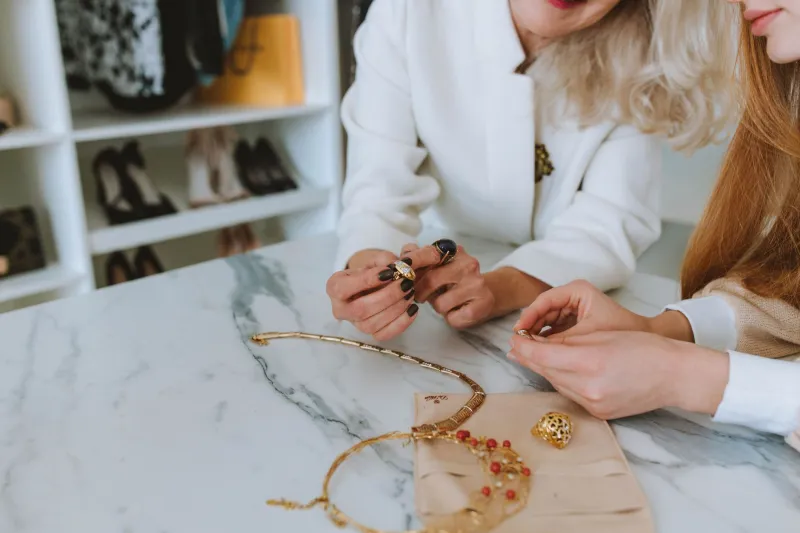
There is a particular kind of pleasure that arrives only after patience. A meal slow-cooked through an afternoon. A letter written and revised over several days before being sent. A piece of jewelry revisited three times before it finally becomes yours. In a culture that has engineered friction out of nearly every transaction — one-click purchases, same-day delivery, digital wish lists that convert to orders in seconds — the deliberate pause has become something genuinely rare. And for that reason, it has also become genuinely luxurious.
At Siviri, we have long believed that the relationship between a person and a piece of handcrafted jewelry begins long before the moment of acquisition. It begins in looking, in returning, in living with the idea of something before committing to it. That process, which so many buyers abbreviate or skip entirely, is not an obstacle to ownership. It is, in fact, the foundation of it.
What Impulse Purchases Cannot Offer
The fast fashion industry has conditioned American consumers to treat accessories as disposable — seasonal, interchangeable, and ultimately forgettable. A bracelet purchased on a Tuesday afternoon because it was on sale rarely carries the same emotional resonance as one chosen after months of consideration. This is not sentiment speaking. It is psychology.
Research in consumer behavior consistently demonstrates that the anticipation of acquiring something meaningful contributes substantially to how much we ultimately value it. When we wait — when we return to a piece, reconsider it, sleep on it, and choose it again — we are not simply delaying gratification. We are deepening it. Each revisit is a small act of confirmation. Each morning we wake up still thinking about a particular ring or pendant is evidence that the object has earned its place in our lives.
This is precisely what separates a jewelry wardrobe built with intention from a collection assembled through convenience.
The Practice of the Considered Return
For those unaccustomed to this kind of deliberate purchasing, the practice of the considered return offers a useful framework. It works as follows: when you encounter a piece that arrests your attention, resist the immediate acquisition. Instead, note it — photograph it, save it, write a few lines about why it moved you — and then step away for a defined period. Two weeks is a reasonable minimum for a significant purchase. For a commission or a major investment piece, three to six months is not excessive.
At the end of that period, return to the piece with fresh eyes. Ask yourself whether the appeal has deepened or diminished. Has the object grown more specific to you — more yours — in your imagination? Or has the initial excitement faded into indifference? This is not a test of willpower. It is a test of resonance. And it is one that only time can administer.
Many Siviri clients describe exactly this experience. They first encounter a piece — perhaps a hand-forged gold cuff or a gemstone pendant set in oxidized silver — and feel immediately drawn to it. They wait. They return. And when they finally commission or purchase the work, the satisfaction is of an entirely different order than anything an impulse could have produced.
Restraint as a Marker of Taste
There is a reason that the most refined collectors in any field — art, wine, furniture, clothing — tend to own fewer things and love them more completely. Restraint is not deprivation. It is curation. And curation, at its most sophisticated, requires the willingness to say not yet, or even not this one, in service of the eventual yes that truly means something.
In jewelry specifically, this principle carries additional weight. Unlike a blouse that can be donated when the season changes or a pair of shoes that simply wears out, a well-made piece of handcrafted jewelry is intended to endure. Its physical longevity makes the emotional relationship with it all the more consequential. A ring you wear for thirty years should be a ring you chose thirty years ago with full conviction — not one you reached for because it was available on a Friday afternoon when you had a credit card in hand.
The discerning buyer understands this intuitively. She does not experience waiting as frustration. She experiences it as part of the pleasure.
When the Moment Finally Arrives
There is a particular quality to the satisfaction of a purchase made after genuine deliberation. It carries a kind of settled certainty — a feeling that this object was always meant to be yours, that the waiting simply confirmed what you already knew. That feeling does not diminish over time. In fact, it tends to compound. The story of how you came to own a piece becomes part of the piece itself.
This is one of the most compelling arguments for patience in luxury jewelry purchasing: the acquisition becomes a memory worth keeping. You remember the first time you saw it. You remember the weeks of returning to it in your mind. You remember the moment you finally decided. That narrative — private, personal, entirely your own — transforms an object into something closer to a keepsake from the very beginning.
At Siviri, we design and craft pieces meant to carry that kind of weight. They are not made for impulse. They are made for intention. And intention, like all meaningful things, rewards those willing to take the time it requires.
A Final Word on Patience
Waiting before you buy is not a strategy for saving money, though it may occasionally have that effect. It is a strategy for living more deliberately — for ensuring that what you bring into your life, particularly the things you intend to keep and perhaps one day pass on, reflects your values rather than your momentary mood.
In a market saturated with the immediate and the disposable, the ability to pause is a form of power. It signals that you know what you want, that you trust your own judgment enough to let it develop, and that you regard your attention as something worth protecting.
The most enduring pieces in any collection are rarely the ones acquired first. They are the ones waited for longest — and loved, for that reason, most completely.