Adornment Without Explanation: Why Meaningful Jewelry Has Nothing to Prove
For much of the twentieth century, luxury jewelry in America operated according to a legible grammar. Certain stones meant certain things. Certain settings communicated certain levels of achievement. The vocabulary was shared, and the wearing of fine jewelry was, at least in part, a form of public declaration — a way of marking arrival, status, or occasion in terms that strangers could read at a glance.
That grammar has not disappeared. But it is no longer the only language available. And for a growing number of discerning American consumers, it is no longer the most interesting one.
The Difference Between Status and Story
There is a meaningful distinction — one that is easy to describe but sometimes difficult to articulate in the moment of purchase — between jewelry worn as status performance and jewelry worn as personal expression. The former is oriented outward. Its value is, in significant part, contingent on being recognized. The latter is oriented inward. Its value is intrinsic, rooted in what the piece means to the person wearing it, regardless of whether that meaning is legible to anyone else in the room.
This is not a moral distinction. Jewelry has always carried social meaning, and there is nothing inherently shallow about wanting to mark a milestone in a way that others can acknowledge. But the cultural moment we are living through has produced something more nuanced than a simple rejection of visible luxury. It has produced a recalibration — a shift in what discerning buyers are actually seeking when they invest in a significant piece.
Increasingly, what they seek is a piece that tells their story. Not the story of a price point, or a brand's heritage, or a stone's market value. Their story. The specific, irreproducible narrative of a particular life, encoded in form and material and craft.
Why Handcrafted Pieces Carry a Different Kind of Weight
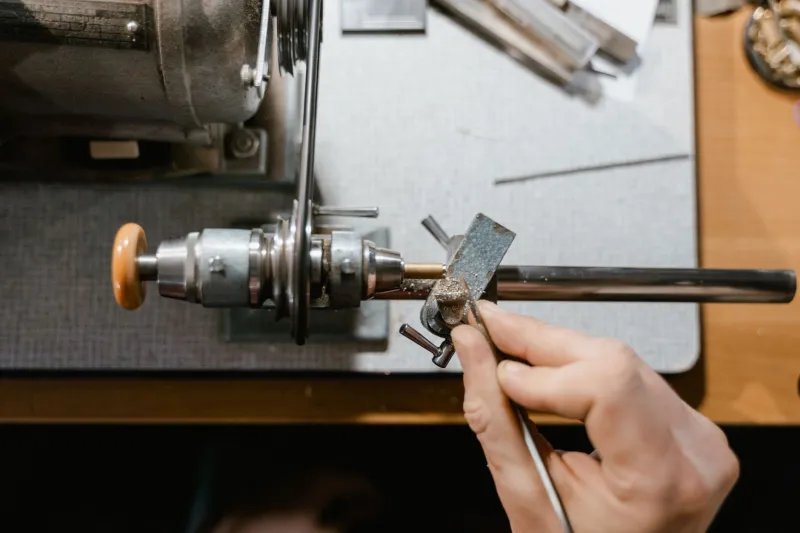
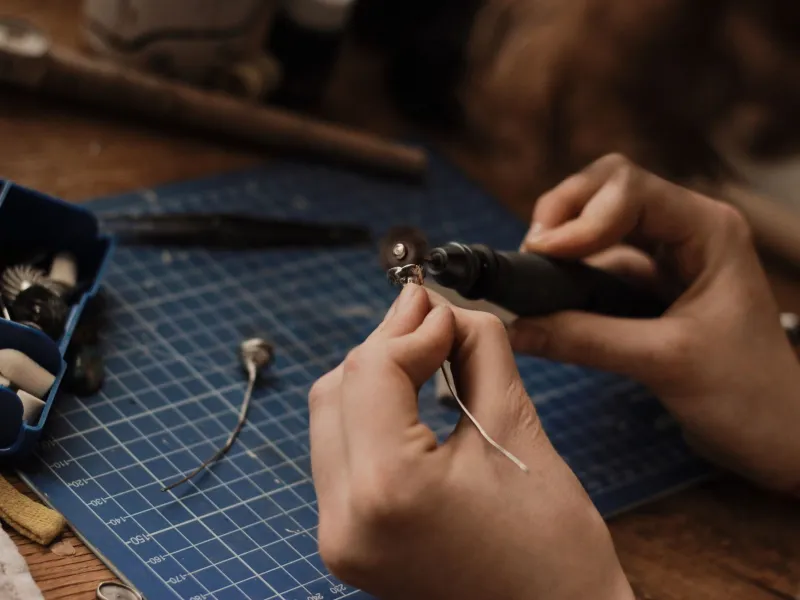
Mass-market jewelry, however beautifully executed within its own parameters, cannot do this. It is designed to appeal broadly, to read cleanly across a wide range of contexts and wearers. Its legibility is, by necessity, general. A handcrafted piece, made by a skilled artisan in response to a specific commission or a specific vision, operates differently. It carries the specificity of its making — the decisions made at the bench, the characteristics of a particular stone chosen from many, the finishing choices that reflect both maker and wearer.
This specificity is what makes handcrafted jewelry resistant to easy categorization. It cannot be read at a glance in the way that a recognizable logo or a standard setting can. It requires closer attention, a different kind of engagement. And for those who wear it, that is precisely the point.
At Siviri, the work of the artisan begins with listening. What does this piece need to become? What should it carry, and for whom? These questions do not have market-rate answers. They have personal ones. And the jewelry that results from that process belongs, in a way that mass-produced pieces simply cannot, to the person who wears it.
The American Reclamation of Personal Luxury
There is a particular strain of American cultural anxiety around visible wealth — a tension between the desire to mark success and the discomfort of appearing to do so too overtly. This tension has, at various cultural moments, produced either conspicuous excess or studied minimalism, with relatively little room for the kind of thoughtful, personal luxury that falls between those poles.
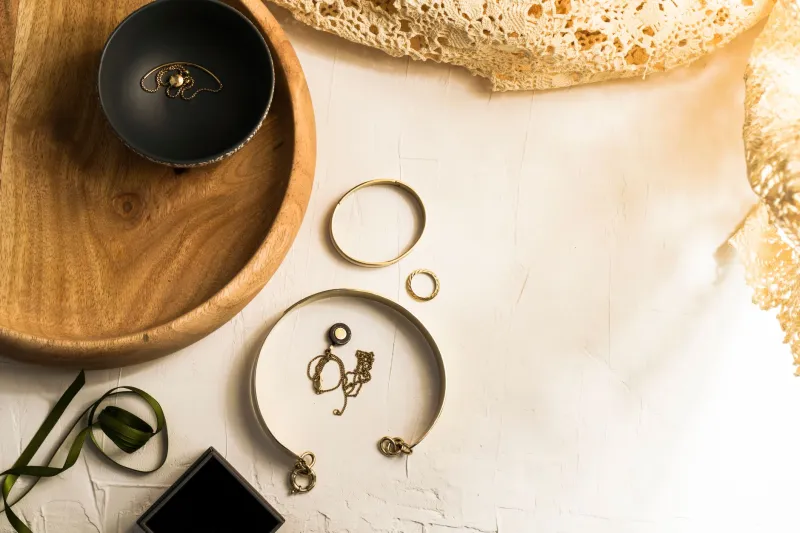
What is shifting now is the emergence of a third option: intentional adornment. Jewelry worn not to announce an income bracket or to perform modesty, but to carry meaning — to serve as a private landmark in a public life. A ring commissioned to mark a decision made alone, worn daily as a reminder of that decision. A necklace that incorporates a stone from a place that changed the wearer's understanding of something important. A bracelet made to a specific weight and finish because the wearer knows, after years of paying attention, exactly what feels right on their wrist.
This kind of wearing requires no explanation and invites no particular interpretation. It is complete in itself. And it is, quietly, one of the most sophisticated forms of self-knowledge available.
Visibility Is Not the Problem
It would be a misreading of this cultural shift to conclude that the move toward personal meaning requires invisibility — that intentional jewelry must be small, subtle, or understated to be authentic. That is not the argument.
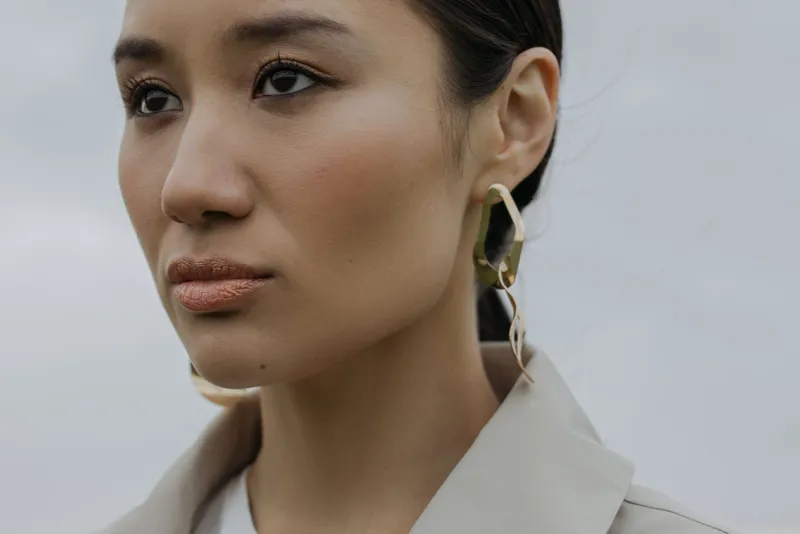
A bold piece, worn with full awareness of what it means and why it was chosen, is every bit as intentional as a delicate one. The quality that distinguishes meaningful adornment from status performance is not scale or visibility. It is the direction of the gaze. Jewelry worn to be seen performing something is fundamentally different from jewelry worn because it is, simply and completely, yours.
The most compelling wearers of fine jewelry are not those who have chosen the most impressive pieces. They are those who have chosen the most right ones — for their lives, their bodies, their histories, their futures. That rightness is visible, even when the piece itself is not immediately legible. It reads as a kind of ease, a settledness, an absence of the slight performance that accompanies wearing something that does not quite belong to you.
What This Means for the Pieces You Choose
If the cultural moment is moving toward intentional adornment — and the evidence suggests, compellingly, that it is — then the most relevant question for any buyer of fine jewelry is not "what will this communicate?" but "what does this mean?"
The answer to that question is personal, and it is yours to determine. But the conditions under which it can be answered honestly require a different kind of shopping — one that begins not with browsing but with reflection, not with trend awareness but with self-knowledge.
A piece of jewelry that you can wear without explanation, without apology, and without the need for external validation is not a small thing. It is, in fact, the fullest expression of what luxury jewelry has always been capable of offering — and what, for too long, it has been asked to perform instead.