Designed for Strangers You Will Love: The Art of Commissioning Jewelry Across Generations

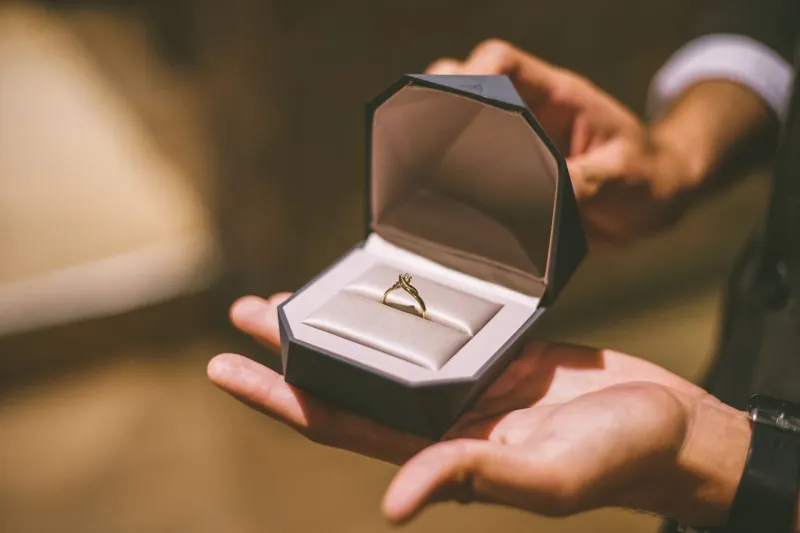
Photo by Photo by Ömer Evren on Unsplash on Unsplash
There is a particular kind of intimacy in designing something for a person who does not yet exist. No dimensions to measure, no preferences to accommodate, no face to picture clearly — only the quiet conviction that whoever she becomes, she will be worthy of something extraordinary. This is the emotional terrain that opens up when a commission is framed not as a personal acquisition, but as an act of inheritance initiated from the very beginning.
At Siviri Jewelry, we have had the privilege of working with clients who arrive at the design process carrying exactly this kind of long view. They are not simply choosing a beautiful object. They are making a decision about what endures.
The Psychological Shift of Designing Beyond Yourself
Most jewelry purchases begin and end with the self — or, at most, extend to a partner or child. The aesthetic is personal. The occasion is immediate. The intention, however meaningful, is rooted in the present.
Commissioning for legacy requires a different posture entirely. The designer must think in terms of decades, not seasons. The client must release some attachment to personal taste and consider instead what is timeless, structurally sound, and symbolically resonant across cultural moments they cannot predict.
This is not a diminishment of personal expression. It is an expansion of it. The client who commissions with a great-grandchild in mind is, in many ways, making the most personal statement of all — asserting that their values, their aesthetics, their sense of what matters, are worth preserving and passing forward.
"I kept asking myself what I wanted her to feel when she held it," said one Siviri client who commissioned a sapphire and platinum ring intended to pass through at least three generations. "Not what she would think of the style. What she would feel about the person who started it."
Material Choices That Outlive Their Maker
Legacy-minded commissioning demands an uncompromising approach to material selection — not because lesser materials cannot be beautiful, but because beauty alone is insufficient when longevity is the goal.
Platinum remains the benchmark for heirloom metalwork. Unlike gold alloys, which wear away with repeated polishing, platinum displaces rather than loses material over time. A platinum piece gains character — micro-scratches accumulate into a patina that speaks of decades of wearing — without structural compromise. For clients commissioning with multigenerational intent, the additional investment in platinum is not a luxury; it is an act of engineering for time.
Gemstone selection carries equal weight. Diamonds, sapphires, rubies, and emeralds — the traditional precious stones — earn their status not only through beauty but through hardness. A stone rated 9 on the Mohs scale will survive generations of daily wear, accidental impact, and the minor indignities of life in a way that softer stones simply will not. When a client selects a center stone for a legacy piece, they are choosing something that will likely outlast everyone currently living in their family.
Setting styles deserve scrutiny as well. Bezel settings, which enclose the stone in a continuous rim of metal, offer greater protection than prong settings for pieces intended to be worn regularly across generations. This is not to say prong settings have no place in heirloom design — they allow more light to interact with the stone and carry their own visual elegance — but the conversation about setting style must include a frank assessment of how the piece is likely to be worn over time.
Encoding Meaning Without Prescribing It
One of the most nuanced challenges in multigenerational design is the question of symbolism. How do you embed meaning into an object without making it so specific to your own story that it alienates the person who inherits it?
The most enduring heirlooms tend to carry what might be called open symbolism — details that suggest rather than dictate. A repeating motif drawn from the natural world. A stone associated with the birth month of the original commissioner, which the inheritor may or may not share. An engraving on the interior of a band that records a date or phrase meaningful to the commissioner, but which the inheritor can contextualize or reinterpret as she chooses.
Siviri's design process for legacy commissions often includes a documentation component — a written record of the design decisions made, the materials chosen, and the intention behind each element. This record travels with the piece, not as a prescription for how it must be understood, but as an invitation to know the person who began the story.
"I wanted her to know why I chose the vine motif," said another client, who commissioned a bracelet she plans to leave to her granddaughter. "Not so she has to love it for the same reasons. But so she knows I thought about her, even then."
The Commission as a Form of Correspondence
Perhaps the most useful frame for understanding legacy-driven jewelry commissions is this: they are letters written in metal and stone. They say something specific about the person who wrote them, and they are addressed to someone whose full identity is not yet known.
Like any good letter, they should be crafted with care for the reader — legible, considered, free of the kind of private references that only the writer could decode. And like any good letter, they should be honest. The piece should reflect genuine taste, not aspirational taste. It should carry the aesthetic sensibility the commissioner actually possesses, not the one she imagines sounds more impressive.
This is where working with a skilled artisan becomes essential. A jewelry maker who understands the psychology of legacy can help a client distinguish between choices made from genuine conviction and choices made from anxiety about how they will be perceived by someone they will never meet. The former produces enduring work. The latter produces pieces that feel, even to the inheritor, somehow uncertain of themselves.
Beginning the Conversation
If you have ever found yourself thinking — even briefly — about what becomes of your most meaningful possessions after you are gone, you have already begun the process. The next step is simply to bring that instinct into a design conversation, to allow it to inform the choices you make rather than leaving it as a vague hope.
At Siviri, we welcome these conversations. They are among the most meaningful we have — not because they are solemn, but because they are genuinely alive with intention. The client who commissions for a generation she will never meet is, in the fullest sense, someone who knows exactly why she is here.