Yours by Choice: The Case for Creating New Heirlooms Rather Than Simply Receiving Them
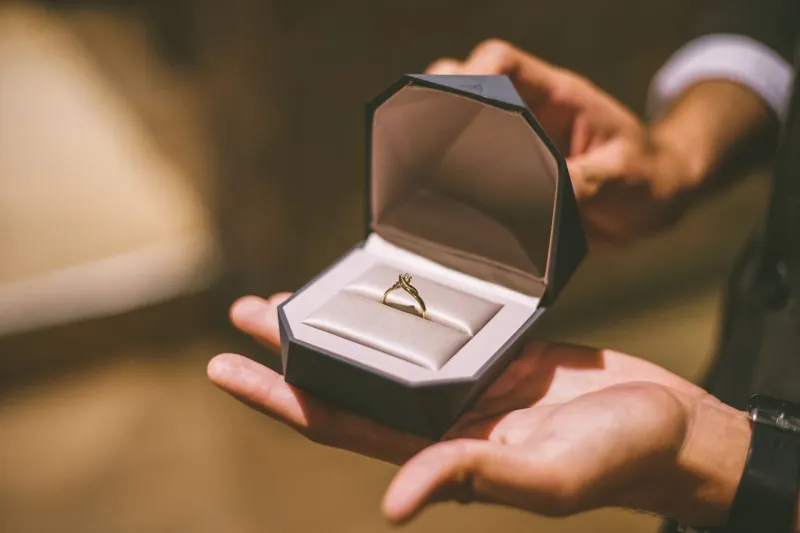
There is a particular kind of pressure that arrives alongside inherited jewelry. It comes wrapped in tissue paper, nestled inside a velvet box passed across a kitchen table or read into existence through an estate attorney's voice. The piece itself may be beautiful. It may carry decades of memory. And yet — for many people — it does not quite feel like theirs.
That tension is worth examining honestly. Because the question of whether to wear an inherited piece, commission something new, or find some synthesis of the two is not merely aesthetic. It is emotional, practical, and deeply personal. And increasingly, discerning customers are choosing to answer it on their own terms.
What Inheritance Actually Gives You
Family jewelry transfers more than metal and stone. It transfers narrative — the story of who wore it, when, and why. A grandmother's engagement ring carries the weight of her courtship, her era, her particular vision of commitment. A mother's bracelet holds the texture of her daily life. These associations are real, and they matter.
But inheritance also transfers constraints. A ring sized for a different hand. A design sensibility shaped by a different decade. A stone chosen to reflect someone else's taste, someone else's story. Wearing inherited jewelry with genuine intention requires a kind of imaginative translation — finding yourself inside someone else's choices and making them your own.
For some, that translation is effortless. The piece fits, in every sense. For others, it sits in a drawer, quietly accumulating guilt alongside dust.
The Guilt That Keeps Jewelry Unworn
It is worth naming directly: many people do not wear their inherited jewelry not because they dislike it, but because they feel they do not deserve to change it. Resizing feels like erasure. Resetting a stone feels like betrayal. And so the piece remains untouched — honored in theory, absent in practice.
This is a particular kind of loss. Jewelry was made to be worn. It was made to catch light, to mark moments, to be noticed and felt. A piece kept in a box out of reverence is, in a meaningful sense, not fulfilling its purpose.
The alternative — commissioning a new piece that draws from family heritage without being constrained by it — offers a different relationship entirely. You are not replacing what came before. You are continuing it, in your own hand.
What Commissioning Gives You That Inheritance Cannot
When you commission a piece from the beginning, you are not translating someone else's vision. You are originating your own. That distinction carries psychological weight that is difficult to overstate.
Ownership, in the deepest sense, is not about possession. It is about authorship. A piece you conceived — whose proportions you considered, whose stone you selected, whose finish you chose after deliberation — belongs to you in a way that no inherited object fully can. You are present in every decision. The piece reflects not just your taste, but your process of arriving at that taste.
For those who have spent years wearing jewelry chosen by others — gifts, hand-me-downs, pieces selected to please rather than to express — a commissioned piece can feel like a revelation. It is, often for the first time, entirely yours.
Honoring Heritage Without Being Held by It
The most elegant resolution, for many customers, is neither pure inheritance nor pure commission — it is synthesis. A stone from a grandmother's ring, reset into a contemporary setting that reflects your own aesthetic. A family motif reinterpreted through a modern silhouette. A piece that carries the emotional DNA of what came before while wearing the design language of who you are now.
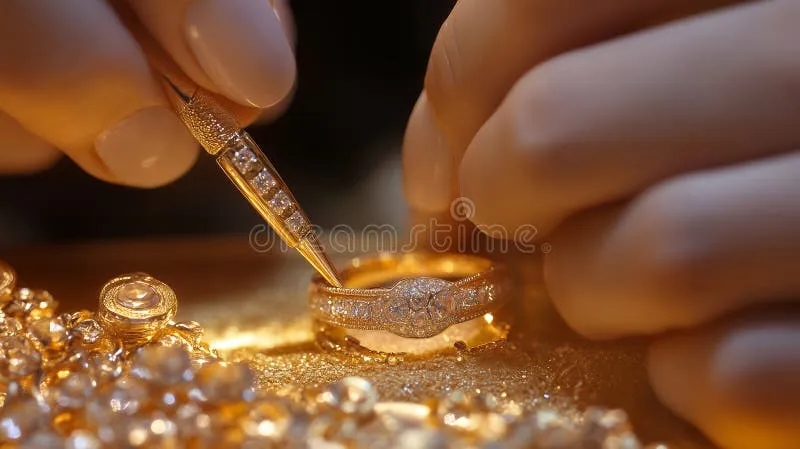
This approach requires a skilled artisan who understands that they are not merely crafting jewelry — they are navigating memory. The process involves listening as much as designing. Understanding what must be preserved and what can be transformed. Knowing when a client's hesitation signals reverence and when it signals grief.
At Siviri, commissions of this nature are approached with particular care. The conversation begins not with dimensions or materials, but with the story. What does the inherited piece mean to you? What do you wish it meant? Where does it fall short of the life you are actually living? From those answers, a new piece begins to take shape — one that honors its origins without being imprisoned by them.
The Practical Calculus
Beyond the emotional considerations, there are practical ones worth acknowledging. Inherited jewelry is often designed for a different era of dress, a different lifestyle, a different physical context. A brooch that suited a formal 1960s wardrobe may have no natural home in a contemporary woman's daily life. A cocktail ring scaled for evening occasions may feel excessive against the backdrop of a more casual, active routine.
Fit matters, too — not just of the ring on the finger, but of the piece within a larger jewelry wardrobe. A collection built with intention has coherence. Inherited pieces, however beautiful in isolation, do not always integrate naturally into that coherence. They can feel like guests at a gathering rather than members of the household.
Commissioning allows you to design for your actual life — your proportions, your daily habits, your existing pieces, your evolving sense of self. The result is jewelry you reach for consistently, not occasionally.
The Heirloom You Create
There is a final consideration that often goes unspoken: the heirloom you commission today is the one your own family may one day inherit. The cycle does not end with you. It continues.
A piece made with genuine craft — with materials selected for longevity, construction designed to endure — carries the potential to outlast its original wearer by generations. The story it begins is yours. The story it continues will belong to those who come after.
In that light, commissioning a new piece is not a departure from the tradition of heirloom jewelry. It is a participation in that tradition at its most active. You are not waiting to receive a legacy. You are choosing to create one.
That distinction — between receiving and creating, between inheriting and authoring — is at the heart of what it means to wear jewelry with intention. And it is, ultimately, the question worth asking before you reach for the velvet box.