The Considered Stack: A Refined Approach to Wearing Multiple Pieces at Once
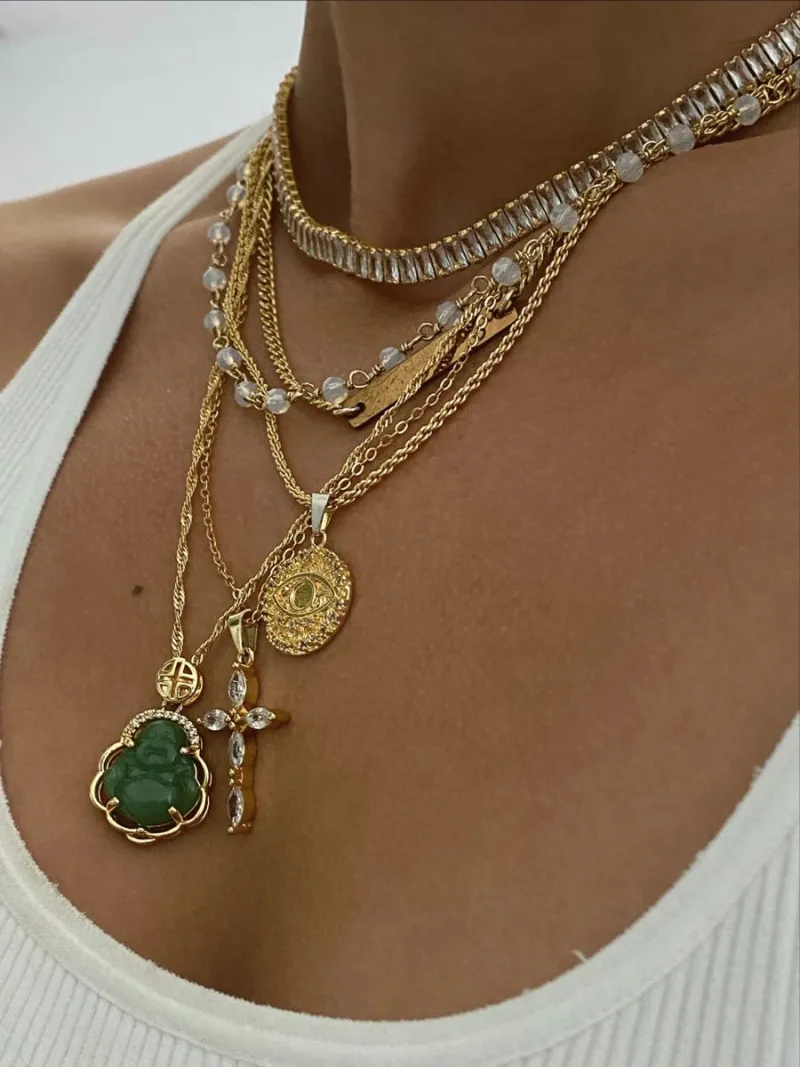
Photo: luxury gold jewelry layering necklaces bracelets styled on woman elegant editorial, via i.pinimg.com
There is a meaningful difference between simply wearing many pieces of jewelry and wearing them well. The former is a matter of quantity; the latter is a discipline — one that draws on proportion, texture, and occasion in equal measure. At Siviri Jewelry, the philosophy has always been that handcrafted pieces carry an inherent intention, and layering them thoughtfully only deepens that meaning.
Whether you are preparing for a client presentation in Midtown Manhattan or a leisurely Saturday brunch in Silver Lake, the way you assemble your jewelry communicates something about how you move through the world. This guide will walk you through the foundational principles of jewelry stacking, organized by occasion, so that every combination you choose feels purposeful rather than accidental.
Start with Proportion: The Architecture of a Stack
Before considering which pieces to combine, it is worth understanding the structural logic that governs successful layering. Think of your neckline — or your wrist, or your fingers — as a canvas. The goal is to create visual movement without chaos.
For necklaces, the most enduring rule is the graduated length principle: begin with a shorter piece close to the collarbone and allow each subsequent layer to fall two to three inches lower. A delicate 16-inch choker in hammered gold, for instance, pairs beautifully with a 20-inch pendant piece and a finer 24-inch chain beneath it. The eye travels naturally downward, creating an elegant cascade rather than a tangled cluster.
With bracelets, contrast of texture is your greatest tool. Pairing a smooth, polished bangle with a finely woven chain and a beaded cuff creates tactile variety that reads as sophisticated rather than mismatched. The key is restraint — three to four pieces on a single wrist is generally the upper limit before the composition loses coherence.
Rings, perhaps the most personal of all jewelry categories, benefit from a similar logic. Stacking delicate bands across multiple fingers reads as intentional; piling several statement rings on one hand can overwhelm. Siviri's artisanal band designs, many of which feature subtle surface textures and organic forms inspired by natural materials, are crafted specifically to nest comfortably alongside one another without competing for attention.
Layering for the Boardroom: Understated Authority
In professional environments, jewelry layering should enhance confidence without drawing attention away from your presence in the room. The operative word here is refinement.
A single layered necklace combination — perhaps a 16-inch piece with a small sculptural pendant paired with a plain 18-inch gold chain — is sufficient for most workplace settings. Metals should be consistent; mixing gold and silver in a boardroom context can read as unresolved rather than eclectic. Opt for yellow gold or rose gold tones, which carry warmth without ostentation.
For the wrist, a single cuff or two slim stacked bangles communicates polish. Avoid pieces that produce sound when you move — the subtle clink of heavy bangles against a conference table is a distraction neither you nor your colleagues will appreciate.
Earrings in professional settings benefit from simplicity. A pair of small sculptural hoops or refined drop earrings allows the necklace and wrist stack to do the compositional work without overcrowding the silhouette.
Layering for the Weekend: Expressive and Relaxed
Casual occasions invite a more exploratory approach to layering. Here, mixing metals becomes not only acceptable but encouraged. The contrast between cool silver tones and warm gold creates a collected, lived-in aesthetic — as though each piece has been gathered over time and holds its own story.
For a Saturday brunch or a stroll through a farmers market in Charleston or Portland, consider building a more abundant wrist stack: three to five pieces that vary in width, material, and finish. A hammered gold cuff, a thin beaded bracelet, and two or three delicate chain bracelets create a layered effect that feels personal and unhurried.
Necklaces for casual occasions can be more adventurous in length and layering depth. Four layers — from choker to a longer pendant piece — work beautifully over a simple linen blouse or a relaxed crewneck. The handcrafted quality of Siviri's pieces ensures that even the most casual stack retains a sense of luxury; the weight of the metal and the precision of the finishing details are evident regardless of how informally the pieces are worn.
The Principle of the Anchor Piece
Every strong stack needs what designers often call an anchor — a single piece that carries the most visual or emotional weight and around which all other elements are organized. This might be a statement pendant with a hand-set stone, a wide cuff with an engraved motif, or a sculptural cocktail ring.
Identifying your anchor piece before building outward prevents the common mistake of layering without a focal point. When everything competes equally for attention, nothing wins. Choose your most meaningful or most visually distinctive piece first, then add supporting elements that complement rather than rival it.
Siviri's artisanal designs are particularly well-suited to this approach because each piece is conceived with its own distinct character. A necklace featuring an asymmetrical hand-formed pendant, for example, has enough presence to anchor an entire look without requiring elaborate companions.
Curation Over Accumulation
Perhaps the most important insight in the practice of jewelry layering is this: more is rarely more. The most compelling stacks are those built from a smaller number of carefully chosen pieces, each of which earns its place in the composition.
This is precisely why handcrafted jewelry holds such enduring value in a culture saturated with mass-produced accessories. When a piece has been conceived, sketched, and shaped by hand — when the artisan who made it made deliberate choices about proportion, surface, and material — it carries a presence that a machine-made duplicate simply cannot replicate. That presence is what makes a three-piece stack feel complete rather than sparse.
At Siviri, the collections are designed with layering in mind from the very beginning. Pieces within each collection share proportional relationships, tonal affinities, and textural echoes that make them natural companions. Shopping within a single collection is one of the most reliable ways to build a cohesive stack, though adventurous combinations across collections often yield the most personal and unexpected results.
A Final Word on Intention
Layering jewelry is, at its core, an act of self-expression — but it is self-expression guided by craft. The pieces you choose to wear together say something about your aesthetic sensibility, your attention to detail, and the care you bring to how you present yourself in the world.
Approach each stack not as an exercise in adding more, but as an opportunity to compose something meaningful. Select pieces that speak to one another. Consider the occasion, the silhouette, and the story you wish to tell. Then wear it all with the quiet confidence of someone who has chosen every detail with purpose.
That, ultimately, is what distinguishes a considered stack from a collection of jewelry — and it is the standard to which every Siviri piece is designed to aspire.