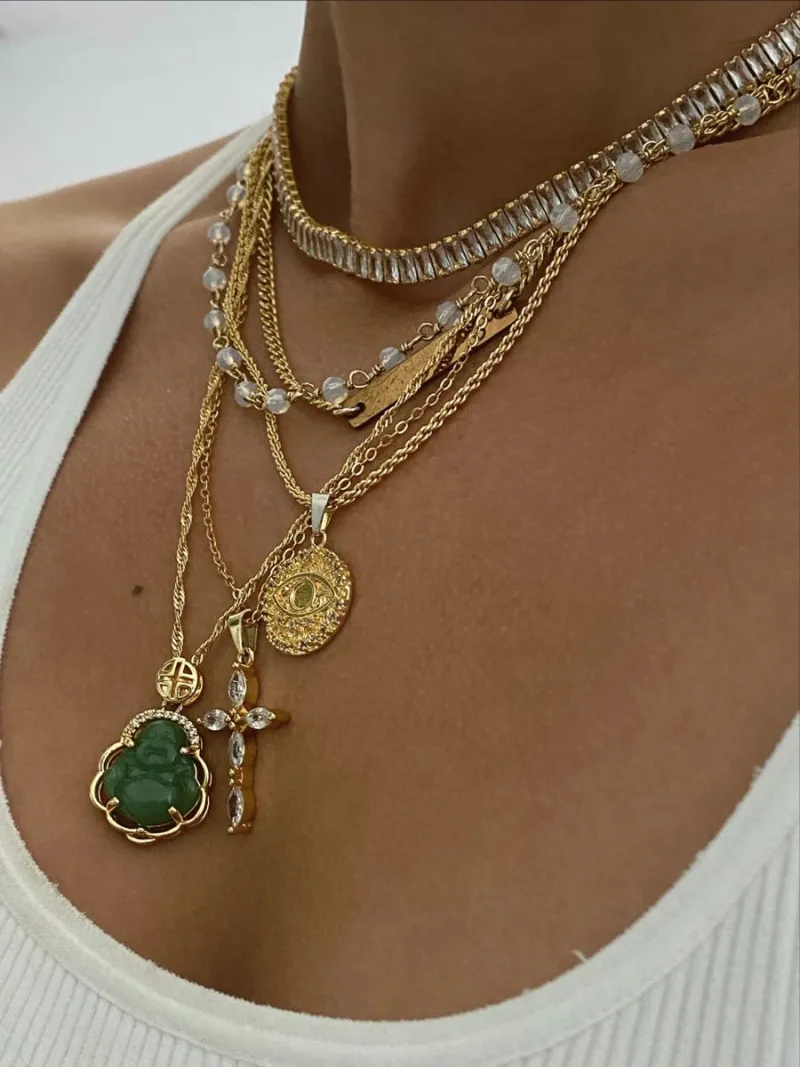
Where Beauty Begins: The Journey from a Sketch to a Siviri Piece
There is a question that every jewelry designer is asked, and that every honest designer finds genuinely difficult to answer: Where do the ideas come from?
For the artisans and creative minds behind Siviri Jewelry, the answer is rarely simple, and it is almost never the same twice. Inspiration is not a resource that can be reliably summoned. It arrives, as most meaningful things do, on its own terms — during a morning walk through a neighborhood still half-asleep, in the pages of a book left open too long, in the particular way afternoon light refracts through a glass of water and casts fractured patterns across a white tablecloth.
What happens after inspiration arrives, however, is a matter of craft, discipline, and deep intentionality. And it is that journey — from the first rough mark on paper to the finished piece resting in its box — that defines what Siviri jewelry truly is.
The First Mark: Sketching as Thinking
For Siviri's design team, the sketch is never a final blueprint. It is, instead, a form of thinking made visible.
The earliest drawings for any piece are often loose and exploratory — proportions deliberately exaggerated, lines allowed to wander, forms that exist more as questions than answers. A single design concept might generate forty or fifty preliminary sketches before a direction begins to emerge. Many of those sketches will never be revisited. That is entirely the point.
"The sketch is where you argue with yourself," explains one of Siviri's lead designers. "You're not trying to get it right immediately. You're trying to understand what the piece wants to be."
This distinction — between imposing a form and discovering one — is central to Siviri's creative philosophy. The brand has always maintained that handcrafted jewelry should feel organic rather than engineered, as though the final form was inevitable rather than manufactured. That sense of inevitability can only be achieved through a process that allows for genuine exploration at the earliest stages.
Once a direction solidifies, the sketches become more precise. Dimensions are noted. Proportions are refined. The relationship between negative and positive space — a consideration as critical in jewelry design as in architecture — is examined carefully. At this stage, the piece begins to exist as a real object in the designer's imagination, even if it has not yet been touched by a single tool.
From Paper to Material: The Translation of Form
The transition from sketch to physical object is where many jewelry concepts either succeed or quietly fail. A form that reads beautifully in two dimensions does not always survive contact with three-dimensional reality. Metal has weight, texture, and reflective properties that paper cannot simulate. A curve that appeared graceful in a drawing may feel awkward when rendered in silver; a proportion that seemed balanced in the sketch may shift entirely once the piece is held in the hand.
This is why Siviri's artisans work through multiple stages of physical prototyping before committing to a final design. Early models may be rendered in base metal or wax, allowing the designer and craftsperson to assess the piece's weight, wearability, and visual presence in real light conditions.
"We hold it up to the window. We put it on. We walk around with it," says one of Siviri's senior metalworkers, who has been shaping jewelry by hand for more than two decades. "You learn things about a piece when it's on a body that you simply cannot learn any other way."
This iterative process — sketch, prototype, evaluate, refine — may repeat itself several times before the design is considered ready for production. For complex pieces involving hand-set stones or intricate surface work, the development cycle can span several months. That timeline is not a limitation; it is a feature. It is what ensures that every piece reaching a customer has been subjected to a level of scrutiny and refinement that mass production fundamentally cannot replicate.
The Artisan's Hand: Where Intention Becomes Physical
Once a design is finalized, the piece enters the hands of Siviri's craftspeople — and it is here that the transformation from concept to wearable object reaches its most intimate stage.
Handcrafting jewelry is a practice that demands both technical precision and a kind of intuitive responsiveness to material. Metal behaves differently depending on temperature, tool pressure, and the speed of the craftsperson's movements. A surface texture created by hand will never be perfectly uniform — and that is precisely its value. The slight variations in a hand-hammered finish, the organic irregularity of a hand-formed bezel, the barely perceptible asymmetry of a hand-shaped curve: these are not imperfections. They are evidence of a human being's engagement with the material, and they are what give handcrafted pieces their unmistakable presence.
Siviri's artisans bring years — in many cases, decades — of accumulated knowledge to each piece they create. They know how a particular alloy will respond to heat. They understand the moment at which a surface has been worked enough and the moment at which further refinement would diminish rather than enhance. They make dozens of small decisions during the creation of a single piece, most of which will never be consciously noticed by the person who wears it — but all of which contribute to the piece's overall quality and character.
The Role of Inspiration in Material Choice
One aspect of the design process that often surprises those unfamiliar with fine jewelry is how significantly material choice shapes the creative direction of a piece — sometimes from the very beginning.
Siviri's designers frequently begin with a material rather than a form. A particular cut of tourmaline, its color shifting between deep teal and warm green depending on the angle of light, may suggest an entire design vocabulary before a single line has been drawn. The grain of a specific wood used in a mixed-material piece may dictate the proportions of the metalwork surrounding it. A freshwater pearl's irregular, organic shape may inspire a setting that celebrates rather than corrects its natural asymmetry.
This responsiveness to material is, again, a quality that distinguishes handcrafted jewelry from its mass-produced counterparts. When a piece is designed around a specific stone or material rather than around a production template, the result carries a coherence and integrity that is immediately perceptible — even if the wearer cannot articulate precisely why the piece feels so right.
Wearable Art: The Case for Investment
The journey from inspiration to finished Siviri piece — measured not in hours but in the accumulated expertise, attention, and care invested at every stage — is ultimately what justifies the category of luxury handcrafted jewelry as a meaningful distinction rather than a marketing phrase.
In a marketplace crowded with options at every price point, the question worth asking is not simply what does this piece look like? but what does this piece represent? A Siviri piece represents a designer's months of exploration, an artisan's decades of skill, and a process of refinement that treats every decision as consequential.
It represents, in the most literal sense, wearable art — not in the abstract, aspirational way that phrase is sometimes deployed, but in the concrete reality that a human being conceived it, shaped it with their hands, and made choices at every stage that no algorithm directed and no machine replicated.
That is what you wear when you wear Siviri. Not just a beautiful object, but the full weight of everything that brought it into being.