The Language of Adornment: What Your Jewelry Choices Reveal About Who You Are
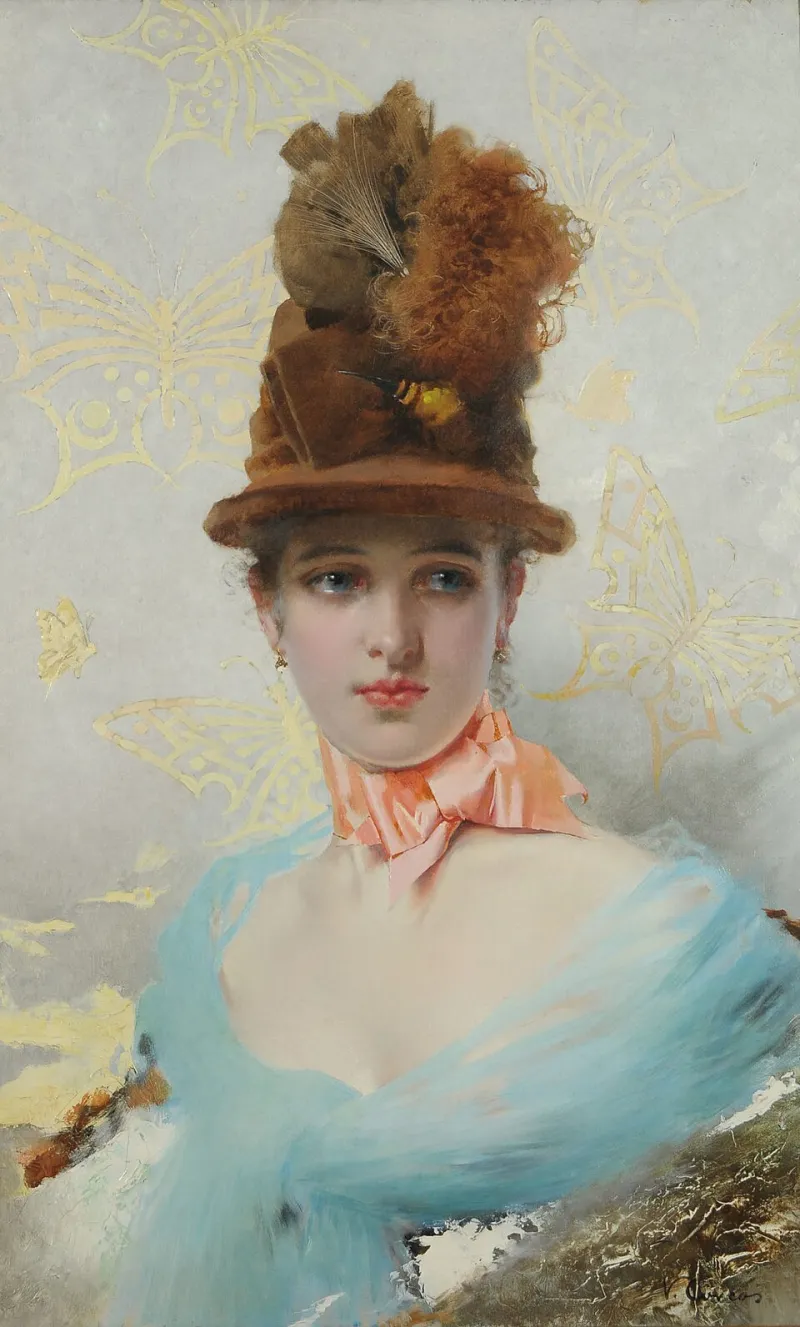
Photo: Vittorio Matteo Corcos, Public domain, via Wikimedia Commons
Consider the last piece of jewelry you put on this morning. Was it instinctive — a reach toward something familiar, a ritual as unconscious as the coffee you brewed afterward? Or was it considered, a deliberate selection from among several options, each carrying its own emotional weight? For most people who love jewelry deeply, it is both. And that simultaneity — the instinctive and the intentional existing in the same gesture — is precisely what makes personal adornment such a rich subject for examination.
Psychologists who study self-presentation have long understood that the objects we choose to wear closest to our bodies are among the most revealing signals we send to the world. Unlike clothing, which is subject to the practicalities of weather and occasion, jewelry is almost purely expressive. It serves no utilitarian function. It exists, in its essence, to communicate.
The Psychology Behind What We Wear
Dr. Carolyn Mair, a behavioral psychologist whose research focuses on the fashion industry, has written extensively about the concept of "enclothed cognition" — the idea that what we wear shapes not only how others perceive us but how we perceive ourselves. Jewelry, she notes, operates at an especially intimate register of this phenomenon. Because it touches the skin, because it catches the light and draws the eye, it functions as a kind of external architecture of identity.
For luxury consumers who choose handcrafted pieces over mass-produced alternatives, this psychological dimension is particularly pronounced. The decision to seek out a one-of-a-kind object — to invest time, resources, and personal narrative into its creation — is itself a statement about values. It communicates a preference for depth over surface, for the considered over the convenient, for objects that carry story rather than merely carry price tags.
Style consultants who work with high-net-worth clients frequently observe that the shift from purchasing ready-made jewelry to commissioning custom work marks a meaningful inflection point in a client's relationship with their own identity. It is the moment, as one New York-based stylist described it, when a person stops dressing for an imagined audience and begins dressing for themselves.
Authenticity as Aesthetic
The word "authentic" is invoked so frequently in contemporary culture that it risks losing its meaning entirely. In the context of jewelry, however, it retains its precision. An authentic piece is one that was made in response to a specific person's specific vision — not manufactured to approximate a demographic's assumed preferences, but crafted in genuine dialogue between a wearer and a maker.
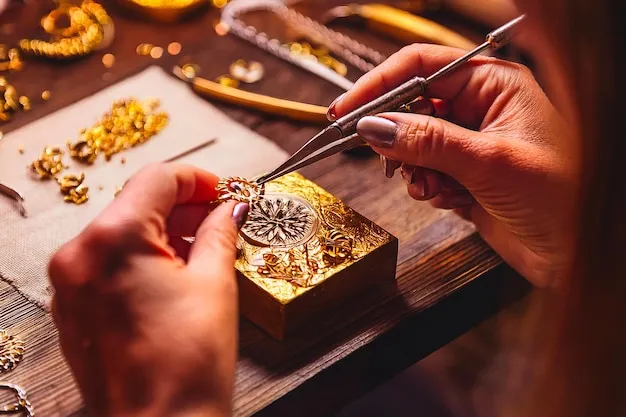
This distinction matters aesthetically as well as psychologically. Mass-produced jewelry, however technically accomplished, is designed to appeal broadly. Its proportions, its stone selections, its finish options are all calibrated toward the median. A handcrafted piece, by contrast, can accommodate the particular: the unusually slender finger, the preference for asymmetry, the desire to incorporate a stone inherited from a relative, the insistence on a clasp mechanism that functions elegantly rather than merely adequately.
These accommodations are not vanity. They are the material expression of self-knowledge. When a client arrives at Siviri with a clear sense of what they want — even when that vision requires patient refinement through conversation with an artisan — they are engaging in an act of self-definition as genuine as any other they might undertake.
Real Stories, Real Stones
The clients who commission custom jewelry at Siviri bring with them a remarkable diversity of motivations, yet a consistent thread runs through their accounts: they are seeking an object that will hold meaning over time in a way that a purchased piece, however beautiful, cannot fully replicate.
One client, a physician based in Chicago, described commissioning a ring to mark her fortieth birthday — not as a gift from someone else, but as a gift from herself to herself. "I wanted something that was entirely mine," she explained. "Not a style I'd seen on someone else, not a design that was trending. Something that reflected the specific person I'd become by that point in my life." The piece she ultimately commissioned — a wide-band ring in 18-karat yellow gold set with an asymmetrically placed Montana sapphire — is, she notes, the only piece of jewelry she never removes.
Another client, a retired architect in San Francisco, approached the commission process with a designer's vocabulary already in place. He knew the weight he wanted in his hand, the surface treatment he preferred, the way he wanted the piece to interact with natural light. What surprised him, he said, was how the process of articulating these preferences revealed things about his aesthetic sensibility he had never consciously examined. "Working with the artisan forced me to make decisions I'd always left vague. And making them felt like knowing myself better."
The Intentional Wardrobe, Applied to Jewelry
The concept of the intentional wardrobe — building a collection of clothing around considered choices rather than impulse acquisitions — has gained considerable traction among style-conscious consumers in recent years. Applied to jewelry, the principle yields a particularly compelling result.
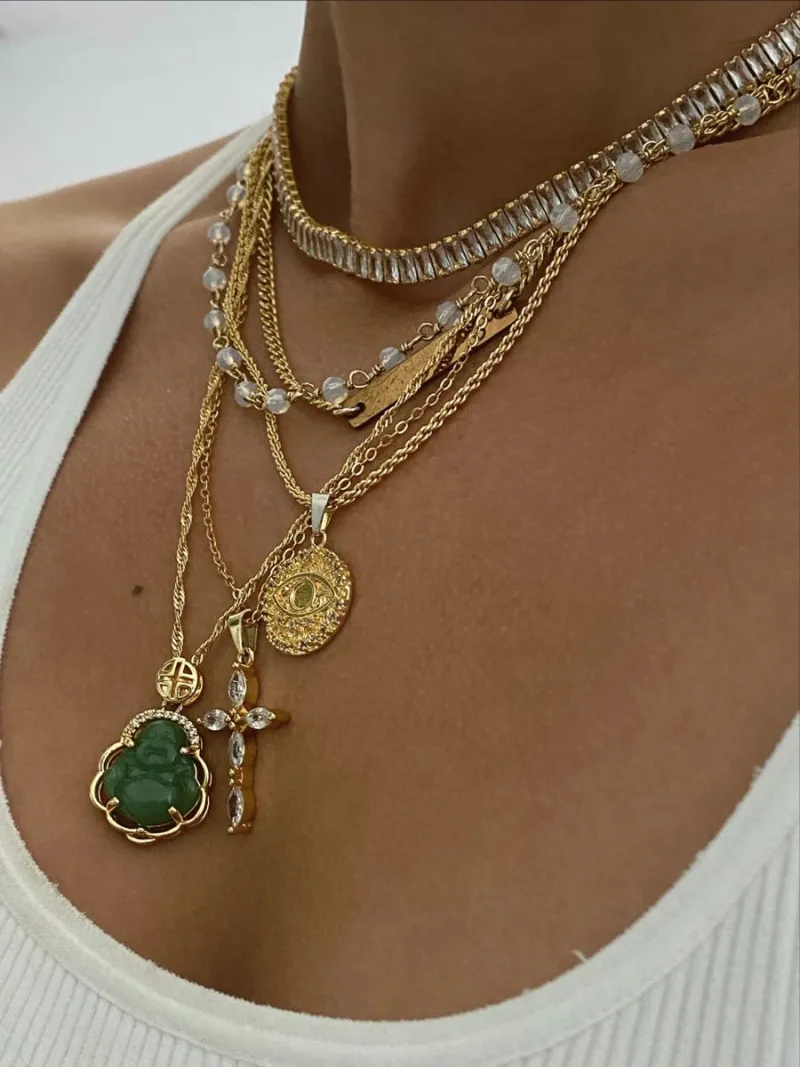
An intentional jewelry wardrobe is not necessarily a small one, nor is it defined by austerity. It is defined by coherence — by the sense that each piece belongs to a larger story about the person who wears it. Some pieces will be quietly versatile, worn daily without calling attention to themselves. Others will be statement works, worn for specific occasions or moods, chosen precisely because they are not neutral. Both categories serve the same function: they allow the wearer to move through the world accompanied by objects that know who she is.
Building such a wardrobe requires the same quality of attention that commissioning a single significant piece demands. It asks the wearer to consider not just what is beautiful in the abstract but what is true to her specifically — her proportions, her coloring, her daily context, her emotional relationship with adornment.
Jewelry as Autobiography
There is a long tradition, particularly in American family culture, of jewelry serving as a repository of autobiography. Engagement rings carry the story of a commitment made. Charm bracelets accumulate the milestones of a life. Pieces inherited from parents or grandparents carry not only their own beauty but the weight of the lives that wore them first.
Handcrafted jewelry participates in this tradition with particular richness because it begins with intention. Unlike a piece purchased impulsively or received without context, a commissioned work arrives already saturated with meaning — the meaning of having been made in response to a specific person's specific vision at a specific moment in their life.
This is, ultimately, why the most discerning luxury consumers return again and again to the handcrafted. Not because it is more expensive, though it often is. Not because it is more technically accomplished, though it frequently is that as well. But because it is, in the most literal sense, made for them. And in being made for them, it reflects back something true.
At Siviri, we believe that jewelry is never merely decorative. It is autobiographical. Every piece we craft is an invitation to know yourself more clearly — and to wear that knowledge, with intention, every day.